
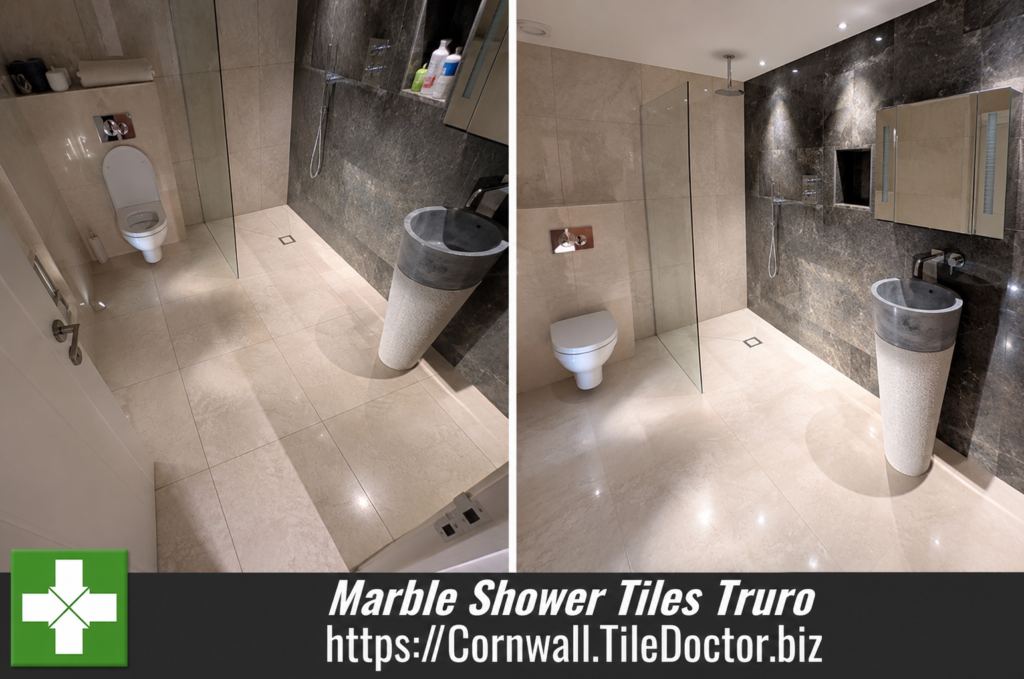
I recently completed the full restoration of a large marble-tiled en-suite wet room at a property in Truro, Cornwall. The project involved diamond polishing the marble wall and floor tiles, replacing the floor grout, renewing the silicone sealant and protecting the natural stone with an impregnating sealer.
Marble is a particularly attractive choice for bathrooms and wet rooms, offering a luxurious appearance that is difficult to replicate with manufactured tiles. However, regular exposure to water, toiletries and everyday use can gradually diminish its polished finish. Grout and silicone joints can also deteriorate over time, detracting from the overall appearance of the room.
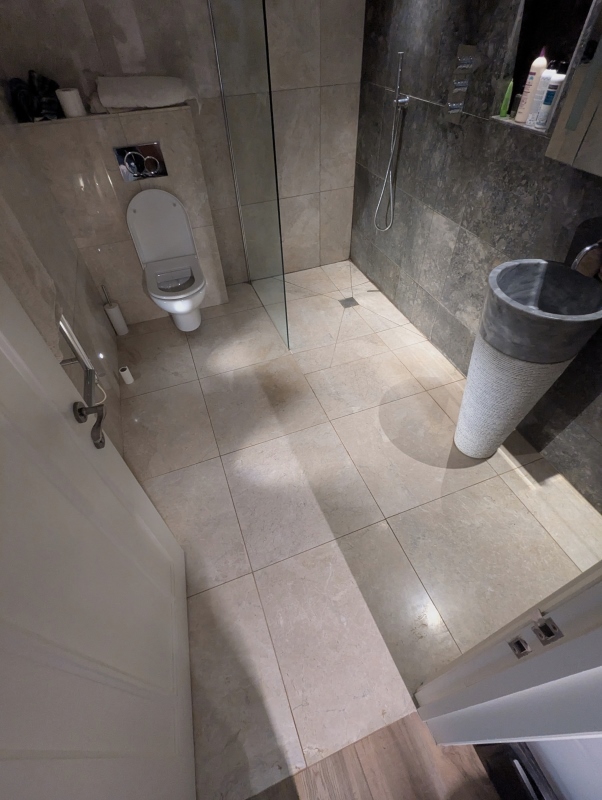
This particular wet room featured large-format, light-coloured marble floor tiles complemented by contrasting dark marble wall tiles. The natural variation in the stone, together with the contemporary fittings and walk-in shower, made for a very attractive bathroom. The aim was to restore the finish throughout the room without the considerable expense and disruption associated with replacing the marble tiles.
Assessing the Marble Tiled Wet Room in Truro
When assessing a natural stone bathroom for restoration, it is important to consider the condition of the stone itself as well as the surrounding grout and silicone joints.
Marble is a calcium-based natural stone that requires a different approach to cleaning and maintenance than ceramic or porcelain tiles. It is particularly sensitive to acidic cleaning products, which can react with the calcium carbonate in the stone and leave dull patches known as etching.
Although regular cleaning can remove surface contamination, it cannot restore a polished finish that has deteriorated through wear or chemical damage. In these circumstances, mechanical polishing using specialist diamond-encrusted burnishing pads is often the most effective solution.
Diamond Polishing the Marble Wall and Floor Tiles
The main part of the restoration involved progressively diamond polishing the marble surfaces using professional Tile Doctor burnishing pads.
These specialist pads incorporate industrial diamonds that gradually refine the surface of the stone. By working through increasingly fine grades, it is possible to improve the smoothness of the marble and restore its natural polished appearance without relying on a topical coating to create a shine.
Progressive Marble Burnishing from 400 to 3500 Grit
I started the restoration using a 400-grit diamond burnishing pad before working progressively through finer grades, finishing with a 3500-grit pad.
The initial, coarser stage of the process prepares the surface of the marble and begins the refinement of the existing finish. Each subsequent grade reduces the fine abrasion marks left by the previous pad, gradually developing greater clarity and polish.
The final fine-grit polishing stage brings out the natural character of the marble, enhancing its colour, pattern and reflective qualities.
Working progressively through the different grades is important, as simply using a fine polishing pad on a deteriorated marble surface will not necessarily produce a consistent finish.
Polishing Marble Walls and Intricate Areas
A wet room of this size presents different challenges to those encountered when restoring a straightforward marble floor.
I used professional rotary floor machines to work across the larger floor areas, alongside specialist hand polishers to restore the wall tiles and reach the more intricate sections of the room.
Hand-held equipment allows greater control when working around fittings, corners and areas where a larger machine cannot operate effectively.
Particular attention was given to achieving an even finish across the contrasting light and dark marble surfaces. Dark polished marble can be especially unforgiving, as variations in the finish are often more noticeable when light reflects across the stone.
By using the appropriate equipment and a progressive diamond-polishing process, I was able to restore a refined, highly polished appearance throughout the wet room.
Regrouting the Marble Wet Room Floor
With the marble polishing completed, attention turned to the floor grout, which was fully renewed as part of the restoration.
Grout makes a considerable difference to the appearance of a tiled floor, particularly when used alongside light-coloured natural stone. Even beautifully polished marble can look tired when the surrounding grout joints are in poor condition.
Renewing the grout helped restore a clean, consistent appearance across the floor and complemented the newly polished marble tiles.
Removing and Replacing the Wet Room Silicone
The existing silicone sealant was also removed and replaced throughout the joints, corners and perimeter areas of the wet room.
Silicone is used at changes of plane and other appropriate junctions because its flexibility helps accommodate small amounts of movement between adjoining surfaces.
Over time, silicone can become discoloured, lose adhesion or deteriorate, making it difficult to maintain and potentially compromising the integrity of individual sealed joints.
Replacing the silicone provided a much neater finish and was an important part of the overall renovation.
Sealing the Marble with Tile Doctor Ultra-Seal
The final treatment involved sealing all the marble wall and floor tiles with Tile Doctor Ultra-Seal.
Ultra-Seal is a natural-finish impregnating sealer that penetrates the pores of the stone rather than forming a visible coating on its surface. It helps protect the marble against the absorption of water and staining contaminants whilst preserving its natural appearance.
This made it particularly suitable for the wet room, where the objective was to retain the polished finish achieved through diamond burnishing.
The sealer provides additional protection and helps make routine maintenance easier. However, it is important to understand that sealing marble does not make it resistant to acid etching, nor does it replace the waterproofing system required beneath wet room tiles.
The Completed Marble Wet Room Restoration
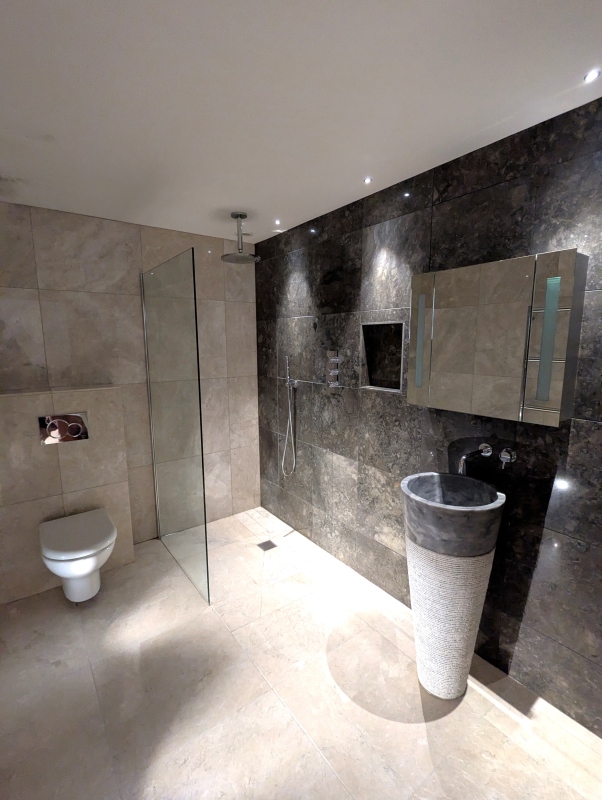
The completed restoration made a significant difference to the appearance of the en-suite. The marble had a much more refined finish, with the natural patterns and contrasting colours of the stone enhanced by the polishing process.
The renewed floor grout and silicone joints complemented the restored marble, leaving the entire room looking refreshed and professionally finished.
The customer was extremely happy with the results and particularly pleased with the transformation achieved throughout the wet room.
Maintaining a Polished Marble Bathroom
For ongoing maintenance, I recommend using a pH-neutral cleaning product suitable for sealed natural stone, such as Tile Doctor Aqua-Pro.
Acidic bathroom cleaners, vinegar, lemon-based cleaning solutions and conventional acidic limescale removers should be avoided, as these can damage the polished surface of marble.
Removing excess water from the shower walls with a soft squeegee and ensuring the room is adequately ventilated will also help reduce the accumulation of mineral deposits and soap residues.
Professional Marble Cleaning and Polishing in Cornwall
As your local Cornwall Tile Doctor, I provide specialist natural stone cleaning, polishing, sealing and restoration services throughout Truro and the surrounding areas.
If your marble bathroom, shower, wet room or tiled floor has lost its original appearance, professional restoration could be an effective alternative to replacement.
Contact Cornwall Tile Doctor on 0345 512 0122 to discuss your natural stone restoration requirements. For more information, see our specialist marble cleaning and polishing and shower tile and grout cleaning websites.